What Conditions Automatically Qualify You For Disability?

- No condition is an automatic approval. Approval always depends on medical evidence, the 12-month duration rule, and not working above the SGA limit ($1,690/month in 2026; $2,830 if blind).
- Compassionate Allowances (CAL): 314 conditions, as of the SSA's 2026 update, that meet the disability standard by definition. Claims are flagged by software at filing and often decided within weeks.
- Blue Book listings: 14 adult body-system categories (musculoskeletal, cardiovascular, neurological, mental disorders, cancer, immune system, and eight others). Meeting a listing's exact clinical criteria ends the evaluation at Step 3 in your favor.
- Medically equaling a listing: Findings of equal severity to a listing also qualify, even when the criteria are not matched exactly.
- Terminal illness (TERI): Claims with a terminal diagnosis are flagged for expedited processing.
- Presumptive disability (SSI only): Conditions such as total blindness, ALS, or end-stage renal disease on dialysis can trigger up to six months of payments before a final decision.
- Conditions not on any list (chronic pain, fibromyalgia, migraines, moderate depression) are approved at Steps 4 and 5 based on residual functional capacity, and the medical-vocational rules favor claimants age 50 and older.
- Work credits: SSDI generally requires 40 credits, 20 earned in the last 10 years; SSI has an income and asset test instead.
- Appeal deadlines: 60 days to request reconsideration after a denial, and 60 days after that to request a hearing.
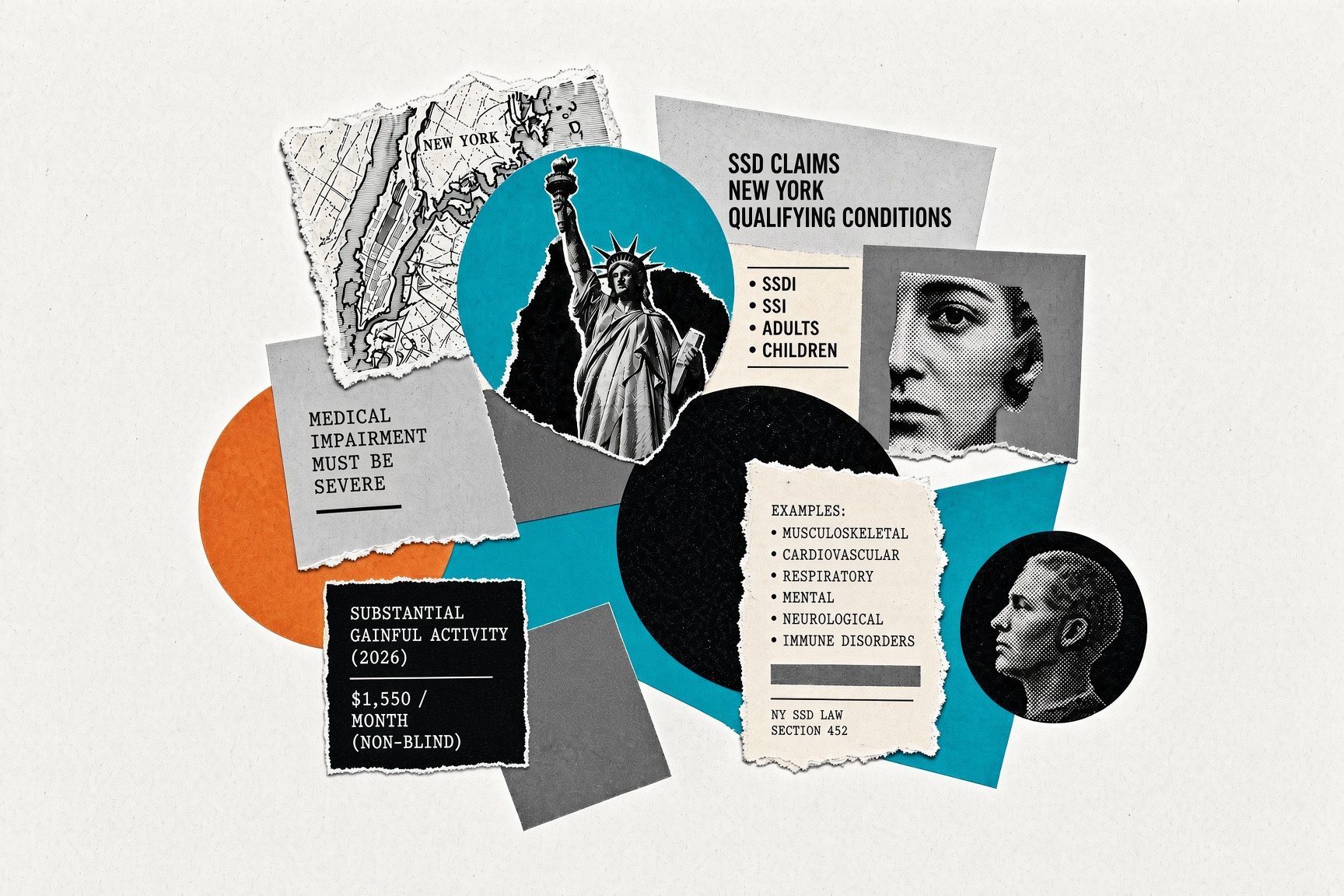
No medical condition automatically qualifies you for Social Security Disability. Every SSD claim must show you can't work at the substantial gainful activity level and that your condition will last at least 12 months or result in death.
However, the SSA fast-tracks three groups: the 314 conditions on its Compassionate Allowances list (mostly aggressive cancers, ALS, early-onset Alzheimer's, and rare genetic disorders), impairments that meet a Blue Book listing across 14 body systems, and terminal illnesses.
Claims in those groups can be approved in weeks rather than months, provided the medical records confirm the diagnosis.
If your diagnosis falls into one of those groups, your disability claim can move quickly. If it doesn't, you can still win. The path is just longer.
This guide explains each category, what "meeting a listing" actually requires, and what to do when your condition isn't on any list.
If you've been diagnosed with a condition you believe should qualify for SSD? Call Terry Katz & Associates at (516) 997-0997 for a free case review.
Three Ways A Condition Can Speed Up Approval
Social Security uses three mechanisms to identify claims that are likely to be approved on the medical evidence alone.
Compassionate Allowances (CAL)
A list of 314 conditions, as of the most recent SSA update, that by definition meet the agency's disability standard. Most are aggressive cancers, rare genetic disorders, and severe neurological diseases. A CAL claim is flagged by software when you apply and can be decided in a matter of weeks.
Blue Book listings
The SSA's Listing of Impairments (Part A for adults) describes, body system by body system, the medical findings that are severe enough to be considered disabling without any analysis of your work history. Meeting a listing at Step 3 of the evaluation process ends the inquiry in your favor.
Terminal illness (TERI) and presumptive disability
Claims involving a terminal diagnosis are marked for expedited handling. Separately, SSI applicants with certain obvious conditions can receive up to six months of payments before a formal decision.
None of these is a rubber stamp. Each one still depends on medical records that document the diagnosis and its severity. What they eliminate is the argument over whether you could do some other job.
Compassionate Allowances: The Closest Thing to Automatic
The Compassionate Allowances program exists to identify diseases that "by definition, meet Social Security's standards for disability benefits," in the agency's own words. Since the program began, more than 1.2 million people have been approved through it.
The list is heavily weighted toward conditions with a poor prognosis:
- Cancers: acute leukemia, pancreatic cancer, esophageal cancer, gallbladder cancer, glioblastoma and other malignant brain tumors, small cell lung cancer, metastatic breast cancer, and many others at an advanced or inoperable stage
- Neurological diseases: ALS (Lou Gehrig's disease), early-onset Alzheimer's disease, Creutzfeldt-Jakob disease, Huntington's disease (adult onset), Lewy body dementia
- Rare genetic and childhood disorders: Tay-Sachs disease, Batten disease, spinal muscular atrophy (types 0 and 1), Edwards syndrome, and dozens of others
- Certain heart, lung, and immune conditions: heart transplant wait-list status, idiopathic pulmonary fibrosis, primary progressive aplastic anemia
The SSA expands the list roughly once a year. The most recent addition brought 14 new conditions, including primary cardiac sarcoma, hepatosplenic T-cell lymphoma, and uveal melanoma with metastases.
You do not apply for a Compassionate Allowance separately. You file a standard SSDI or SSI application, and the agency's screening software flags the claim based on the diagnosis you list and the medical evidence attached.
This is why the wording in your application matters. A claim that says "cancer" is not flagged; one that says "stage IV pancreatic adenocarcinoma" with a pathology report attached is.

The SSA Blue Book: 14 Categories of Listed Impairments
The Blue Book, formally the Listing of Impairments, is the SSA's medical reference for adjudicators.
Part A covers adults and is organized into 14 body systems:
- Musculoskeletal disorders (spinal stenosis, amputation, fractures that fail to heal, severe joint dysfunction)
- Special senses and speech (statutory blindness, profound hearing loss, loss of speech)
- Respiratory disorders (COPD, cystic fibrosis, chronic respiratory failure)
- Cardiovascular system (chronic heart failure, ischemic heart disease, recurrent arrhythmias)
- Digestive disorders (chronic liver disease, inflammatory bowel disease, short bowel syndrome)
- Genitourinary disorders (chronic kidney disease requiring dialysis or transplant)
- Hematological disorders (sickle cell disease, hemophilia, bone marrow failure)
- Skin disorders (severe burns, bullous diseases, chronic infections)
- Endocrine disorders (evaluated by the body system they damage, such as diabetic neuropathy or retinopathy)
- Congenital disorders that affect multiple body systems (non-mosaic Down syndrome)
- Neurological disorders (epilepsy, multiple sclerosis, Parkinson's disease, stroke, traumatic brain injury)
- Mental disorders (schizophrenia, bipolar disorder, major depression, anxiety, PTSD, intellectual disorder, autism)
- Cancer (malignant neoplastic diseases)
- Immune system disorders (lupus, HIV, rheumatoid arthritis, systemic sclerosis)
Having a diagnosis in one of these categories is not the same as meeting a listing. Each listing spells out specific clinical findings.
Listing 1.15 for spinal disorders, for example, requires documented nerve root compression, physical findings such as muscle weakness and sensory loss, imaging that confirms the compromise, and either a documented medical need for a walker, two canes, or a wheelchair, or an inability to use one arm for work tasks while the other is needed for a cane or similar device. A diagnosis of degenerative disc disease alone does not get there.
Two things follow from this:
First, the medical records have to contain the exact findings the listing calls for, which often means asking a treating physician to document function, not just diagnosis.
Second, if your condition is close but not exact, you can still be found to "medically equal" a listing when your combined findings are of equal severity. Equaling a listing is where an SSD attorney's familiarity with the criteria makes the most difference.
When Your Condition Isn't On Any List
Most people approved for SSD do not meet a listing. They win at Steps 4 and 5 of the SSA's sequential evaluation, which asks whether your remaining ability to function, called your residual functional capacity, rules out your past work and any other work that exists in significant numbers.
This is the route for chronic pain, fibromyalgia, migraines, moderate depression, back injuries without nerve compression, and combinations of conditions that are individually manageable but disabling together. Age matters here. Under the SSA's medical-vocational rules, a claimant who is 50 or older with a limited education and no transferable skills can be found disabled at a level of function that would not qualify a younger worker. If that describes you, our page on SSD for persons over 50 explains how those rules work.
We have written separately about whether chronic migraines qualify for disability, which is a good example of a condition with no listing of its own that is regularly approved on the strength of well-documented functional limits.
Requirements That Apply No Matter What Your Condition Is
Every SSDI claim, fast-tracked or not, has to clear the same non-medical thresholds.
You cannot be working at the substantial gainful activity (SGA) level. For 2026, that means earning more than $1,690 per month before taxes, or $2,830 if you are statutorily blind. Earnings above that line end the inquiry at Step 1 regardless of diagnosis.
The condition must last, or be expected to last, at least 12 consecutive months, or result in death. A serious injury with a full recovery in eight months does not qualify, no matter how severe it was during those months.
You need enough work credits. Most adults need 40 credits with 20 earned in the 10 years before disability began. Workers under 31 need fewer. If you have not worked enough, Supplemental Security Income (SSI) may be available instead, with an income and asset test in place of the work-credit test.
Your medical evidence has to come from acceptable medical sources. Licensed physicians, psychologists, and, for certain impairments, podiatrists, optometrists, audiologists, and advanced practice nurses. A chiropractor's records are considered but cannot establish a medically determinable impairment on their own.
How Social Security Reviews Claims From Long Island
When you file from Nassau or Suffolk County, your application goes to a local field office and is then sent to the New York State Division of Disability Determination, the state agency that makes the medical decision on Social Security's behalf. A disability examiner and a medical consultant review your records against the listings and, if necessary, assess your residual functional capacity.
Learn more: How Social Security Disability is determined in New York
If the state agency denies the claim, you have 60 days to request reconsideration, and another 60 days after that to request a hearing before an administrative law judge. Hearing wait times in the New York region routinely exceed six months, which is why getting the medical evidence right at the initial application stage, and identifying a Compassionate Allowance or listing-level condition up front, saves so much time. Our guide to appealing SSD denials covers each stage.
What To Include In Your Application If You Have A Qualifying Condition
A few practical steps make a difference for claims involving a CAL or listing-level condition:
- Use the precise medical name of your diagnosis on the application, matching the language on the SSA's Compassionate Allowances list or in the Blue Book listing.
- Attach the confirming test with the application rather than waiting for the SSA to request it: the pathology report, the MRI, the EMG, the pulmonary function test, the echocardiogram.
- Ask your treating doctor for a statement that tracks the listing criteria by name and section number, rather than a general letter saying you cannot work.
- Document every condition, not just the primary one. The SSA is required to consider the combined effect of all your impairments, and a secondary condition can push a near-miss claim over the line.
- Keep a record of how the condition affects daily activities. Adjudicators read function reports closely, and inconsistencies between the medical file and your own description are a common basis for denial.
Frequently Asked Questions
What is the easiest disability to get approved for?
Conditions on the Compassionate Allowances list are approved fastest and with the least dispute, because the diagnosis itself establishes disability. Among common conditions, those with objective test results that match a Blue Book listing, such as end-stage kidney disease on dialysis, statutory blindness, or metastatic cancer, are approved most reliably. "Easy" is relative, though. Even these claims are denied when the medical file is incomplete.
Does cancer automatically qualify for disability?
Not every cancer, but many do. Cancers that are metastatic, inoperable, recurrent after treatment, or of certain aggressive types (pancreatic, esophageal, acute leukemia, glioblastoma, small cell lung cancer, among others) are on the Compassionate Allowances list. Other cancers are evaluated under Blue Book section 13.00, which generally requires the disease to be advanced or to have failed treatment. An early-stage cancer treated successfully may not qualify unless the treatment's side effects keep you from working for 12 months or more.
What mental health conditions qualify for disability?
Blue Book section 12.00 covers schizophrenia and psychotic disorders, bipolar and depressive disorders, anxiety and obsessive-compulsive disorders, PTSD and trauma-related disorders, intellectual disorder, autism spectrum disorder, neurocognitive disorders, eating disorders, somatic symptom disorders, and personality disorders. To meet a listing you generally need medical documentation plus either an extreme limitation in one area of mental functioning or marked limitations in two areas (understanding and applying information, interacting with others, concentrating and maintaining pace, and adapting or managing oneself).
How long does it take to get approved for disability with a Compassionate Allowance?
CAL claims are typically decided within a few weeks of the SSA receiving the medical evidence, compared with several months for a standard initial claim. The five-month waiting period for SSDI cash benefits still applies to most CAL claims, with an exception for ALS, which Congress exempted from the waiting period.
Is the qualifying-condition standard different for SSDI and SSI?
The medical standard is identical. The difference is the non-medical test. SSDI requires work credits from your own earnings record; SSI requires limited income and resources. Someone who has never worked enough to qualify for SSDI can still receive SSI for the same condition. SSI also offers presumptive disability payments for certain obvious conditions, such as total blindness, amputation of a leg at the hip, end-stage renal disease on dialysis, or ALS, for up to six months while the formal decision is pending.
Do I need a lawyer if my condition is on the Compassionate Allowances list?
Many CAL claims are approved without representation. Where an attorney adds value is in making sure the claim is flagged in the first place (the diagnosis is worded correctly and the confirming test is attached), in establishing the earliest possible onset date so that back benefits are maximized, and in handling the claim if it is not flagged and falls into the standard queue. Representation in SSD cases is on a contingency basis. Attorney fees come out of past-due benefits, are capped by federal regulation, and are paid only if the claim is approved.
Talk to a Long Island Social Security Disability Attorney
Terry Katz & Associates has handled Social Security Disability claims and appeals for Long Island and New York City residents for more than 30 years, from initial applications through hearings before federal administrative law judges.
If you have been diagnosed with a condition you think should qualify, or you have already been denied, a free case review will tell you whether your claim fits a Compassionate Allowance, a Blue Book listing, or the medical-vocational rules, and what evidence it needs.
Call (516) 997-0997 or contact us online to speak with an SSD attorney at our Uniondale office.

Mi experiencia con la firma Terry Katz and Associates resultó ser una experiencia muy gratificante. Mi caso específico se refería a la recepción de los beneficios de la SSI. Tras haber sido denegada mi solicitud inicial de prestaciones de la Seguridad Social, me puse en contacto con la firma Terry Katz and Associates con la esperanza de reforzar mi apelación.
La asociada con la que trabajé, la Sra. Langdale, fue realmente excepcional y me brindó no solo una orientación invaluable, sino también una atención agradable y compasiva a lo largo del camino. Es una persona maravillosa. Al final, mi apelación prosperó y ahora estoy recibiendo beneficios.
Estoy muy agradecido a la firma Katz por la asistencia excepcional que recibí, no solo de la Sra. Langdale, sino de todos los asociados involucrados en la firma. Recomiendo encarecidamente que contraten sus servicios a cualquiera que quiera fortalecer su caso de SSI. ¡Gracias de nuevo, Terry Katz & Associates!